Media
Latest News
NEW ORLEANS, LA — Today, Congressman Troy A. Carter, Sr. (D-LA) released the following statement on the passing of Dr. Norman C. Francis.
###
NEW ORLEANS, LA —Today, Congressman Troy A. Carter, Sr. (D-LA) released the following statement on the passing of Reverend Jesse L. Jackson, Sr.
“Today, we mourn the passing of Reverend Jesse Louis Jackson, Sr., a leader among leaders whose life helped bend the moral arc of our nation toward justice. Reverend Jackson was a towering figure in the civil rights movement, a champion for the poor and the marginalized, and a relentless advocate for voting rights, economic fairness, and human dignity.
”For me, this loss is deeply personal. As a young man serving as a staffer to then Mayor Sidney Barthelemy, I had the honor of meeting Reverend Jackson for the first time. His mere presence was commanding, but it was his compassion and clarity of purpose that left the greatest impression. He took time to encourage young leaders, and I was one of the many who benefited from his mentorship. Over the years, he encouraged me in every step of my political career, offering wisdom, affirmation, and the steady reminder that public service is a calling rooted in justice and love for community.
“From marching alongside Dr. Martin Luther King Jr., to building Operation PUSH and the Rainbow PUSH Coalition, to his historic presidential campaigns that expanded participation in our democracy, Reverend Jackson inspired generations to believe that their voices mattered. He did not just speak about hope. He organized it. He mobilized it. He demanded it.
“Reverend Jackson’s life reminds us that leadership is not about position. It is about purpose. It is about lifting others as you climb and refusing to accept injustice as inevitable. He mentored millions across this nation and around the world, challenging us to stand taller, speak louder, and never give up on the promise of America.
“As we honor his extraordinary legacy, may we recommit ourselves to the work he began and carried forward with faith and courage. We extend our heartfelt condolences to his family and to all who were touched by his life of service.
“His voice may be stilled, but his message endures.”
###
WASHINGTON, D.C. – Today, Congressman Troy A. Carter, Sr. (D-LA) issued the following statement after the Environmental Protection Agency (EPA) abolished the Endangerment Finding:
“The Trump administration’s decision to roll back the EPA’s Endangerment Finding is recklessand dangerous. By denying the overwhelming scientific consensus that climate pollution endangers public health, Republicans are making climate denial the official policy of the United States. This action puts polluter profits ahead of people’s lives.
“Here in Louisiana, we don’t have the luxury of pretending climate change isn’t real. We are already experiencing more severe hurricanes, catastrophic flooding, record-breaking heat waves, and other extreme weather. Our families are already paying the price of the climate crisis. Abandoning the EPA’s duty to protect public health will only exacerbate these harms.
“Repealing the Endangerment Finding doesn’t lower costs for working families or make us safer. It increases pollution, drives up health care costs, and exposes millions of Americans to preventable illness and premature death. Trading death for profits isn’t energy policy. It’s a moral failure.
“The EPA’s mission is to protect human health and the environment, not to serve as a shield for polluters. Climate change is happening now, and the evidence is undeniable. I will continue fighting to restore respect for science at the EPA, protect clean air and water, fully fund disaster response without political interference, and stand up for the health, safety, and dignity of the people of Louisiana and this country.”
###
NEW ORLEANS, LA – On Friday, Congressman Troy A. Carter, Sr. (D-LA) hosted Senator Sheldon Whitehouse (D-RI), Ranking Member of the Senate Environment and Public Works Committee, for an “Insurance Affordability Tour” in New Orleans with stakeholders across LA-02. The U.S. property insurance system is under acute strain. Private insurers face multiple challenges that contribute to unaffordable premiums, more restrictive coverage, and declining availability for policyholders. Much of this pressure is due to persistent natural catastrophe risks – floods, wildfires, hurricanes, tornadoes, hailstorms, and earthquakes – that exist in every state. Meanwhile, rising flood insurance premiums under the Risk Rating 2.0 system of the National Flood Insurance Program are prompting policyholders to drop their coverage and weakening the insurance pool.
“Louisiana families and businesses are facing a crisis of rising homeowners and flood insurance premiums, worsening our housing affordability issues. We've seen premiums skyrocket, forcing families to make impossible choices between protecting their homes and paying for groceries, healthcare, or their children's education. Family businesses that have been pillars of our communities for generations are now wondering if they can afford to stay open here in south Louisiana. Some of our neighbors are being forced to go without coverage entirely, putting everything they've worked for at risk,” said Rep. Carter.
The Members first toured an Upper Ninth Ward neighborhood of New Orleans to see the impact of the homeowners’ and flood insurance crisis in Louisiana. The tour included stops at development projects that have stalled due to rising insurance costs and visits with homeowners using fortified roofs to lower their insurance premiums. They also convened a roundtable with business and housing advocates about insurance affordability issues in Louisiana, with industries including banking, real estate, and insurance all represented. Finally, the Members toured the facilities of unCommon Construction, a workforce development organization that addresses the construction trades labor shortage, where high school students earn hourly pay and school internship credit for building a house in a semester.
“Our people shouldn't be penalized for geography. We've built our lives, our culture, and our economy here. We live in a working coastal community where we transport American goods worldwide from our ports, produce energy for the nation, and catch the best seafood on earth,” Rep. Carter continued. “That's why I invited Senator Whitehouse to Louisiana, to hear directly from residents about how these rising costs are affecting them and to better understand how Congress can be proactive. Whether it's reforming the National Flood Insurance Program, investing in mitigation and resilience, or finding new approaches we haven't considered yet. We will take what we learn here today back to Washington and fight to be a productive partner in combating these rising insurance costs.”
Background:
In 2025, the United States experienced a billion-dollar extreme weather disaster every ten days, totaling $115 billion in damages. Simultaneously, the insurance gap for American policyholders is widening, and 1 in 8 American homeowners has now forgone homeowners’ insurance entirely. The extreme weather-driven insurance crisis poses systemic shocks to the housing market, labor supply, state and local tax bases, and the federal government’s fiscal stability.
View photos from the events here.
###
NEW ORLEANS, LA – Last week, Congressman Troy A. Carter, Sr. (D-LA) and Congressman Bennie G. Thompson (D-MS), Ranking Member of the House Committee on Homeland Security, convened a Democratic Field Hearing at City Council Chambers at City Hall in New Orleans. Congressman Carter and Ranking Member Thompson were joined by Congressman Seth Magaziner (D-RI) and Congressman Tim Kennedy (D-NY) to hear firsthand accounts of the Trump administration’s terror campaign on Louisiana communities.
“This hearing represented a crucial opportunity for the Homeland Security Committee to hear directly about those abuses and to understand the real impact on citizens and migrants alike since the Trump administration began its harsh immigration enforcement round-up. What we learned will help us investigate and hold this administration accountable for its actions,” said Rep. Carter.
Witnesses at the hearing included Mayor Helena Moreno, Mayor of New Orleans, President JP Morrell, New Orleans City Council, Alanah Odoms, Executive Director, Louisiana ACLU, Homero Lopez, Legal Director of Immigration Services & Legal Advocacy, Tania Wolf, Southeast Advocacy Manager for the National Immigration Project, and Reverend Shawn Anglim, Pastor of First Grace United Methodist Church.
“I was grateful for the opportunity to visit New Orleans to examine the impacts of ICE and Border Patrol operations and to hear directly from people affected. I thank Representative Carter for hosting and our witnesses for their testimony, which highlighted serious concerns about how DHS is operating on the ground. What we heard reflects a broader, nationwide pattern that demands Congress rein in ICE, restore accountability, and ensure immigration enforcement respects the law and the rights of our communities,” said Ranking Member Thompson.
“More than two-thirds of our country now believes that ICE enforcement has gone too far. I’m hearing from people on the left and on the right who say that this is ultimately Unamerican. What we have witnessed in New Orleans is nonviolent individuals being overwhelmingly targeted and profiled. This has caused widespread fear across our city and our region. Parents took their kids out of school, workers stopped showing up at their jobs, and my church - where we have a large Spanish speaking service - people stopped coming to worship. I want to thank Congressman Carter for convening the hearing as we work together to keep our communities safe,” said Mayor Helena Moreno.
Reps. Carter, Thompson, Magaziner, and Kennedy also convened a roundtable with local immigration advocates, faith leaders, and other stakeholders to discuss immigration enforcement actions in the greater New Orleans area, including the impacts of the recent surge of federal officers from “Operation Catahoula Crunch.”
They also conducted an oversight visit of the New Orleans ICE field office in St. Rose, LA. The office serves as a processing facility for recently detained migrants in the New Orleans region. Detainees are brought there before being taken to long-term detention facilities across the state. Visiting the ICE facility allowed the Members to personally verify the conditions under which migrants are held—including access to medical care, food quality, sanitation, sleeping arrangements, and staff treatment.
Background:
On December 3rd, 2025, the Department of Homeland Security (DHS) announced the launch of the federal law enforcement operation in New Orleans, Louisiana dubbed “Catahoula Crunch.” DHS issued a press release stating this operation would target criminal illegal aliens roaming free thanks to sanctuary policies that force local authorities to ignore U.S. Immigration and Customs Enforcement’s (ICE) arrest detainers.
Agents have been patrolling and arresting people across the New Orleans metro area, especially in Kenner, with nearly 20,000 Hispanic residents. At a Kenner city council meeting, one resident said, “I have been asked for my papers twice, and I even had to call my husband to send another type of identification — my birth certificate.” These actions have led residents to question whether agents are racially profiling people who appear Hispanic rather than focusing on criminals. Many Hispanic-owned businesses are temporarily closing due to owners’ concerns about employees and customers being questioned by immigration agents.
View photos from the events here.
###
WASHINGTON, D.C. – This week, Congressman Troy A. Carter, Sr. (D-LA) and Congressman Rob Bresnahan Jr. (R-PA) announced the re-launch of the Bipartisan Opportunity Youth Caucus (BOYC) for the 119th Congress. This first-of-its-kind caucus will highlight bipartisan federal policies that support young people aged 16-24 who are disconnected from school and work or are at-risk of experiencing disconnection – also known as “Opportunity Youth” (OY).
Co-chaired by Reps. Carter and Bresnahan, the caucus will allow Members of Congress to discuss policies and local programs that help constituents have successful careers and positive educational outcomes and highlight Opportunity Youth research and statistics. Nearly 150 national, state, and local organizations signed a letter to the co-chairs in support of the caucus.
“No two people have the same background or path in life. It's our responsibility to ensure everyone has access to the opportunities and the resources to achieve their dreams,” said Rep. Carter. “Some young people are disconnected from work or school, and they need help. I want all our youth not just to survive but thrive.”
“The Bipartisan Opportunity Youth Caucus is about meeting young people where they are and connecting them to real pathways to work, education, and long-term success,” said Rep. Bresnahan. “By bringing both parties together, we can support proven programs like Job Corps and earn-while-you-learn training that strengthen our workforce and our communities. Re-engaging Opportunity Youth isn’t just the right thing to do, it’s an investment in our country’s future.”
“JobsFirst NEPA applauds Representatives Bresnahan and Carter for their leadership in relaunching and co-chairing this first-of-its-kind caucus. By championing the Bipartisan Opportunity Youth Caucus, they are committing to advocate for workforce and economic investment for young adults across the country, including in Northeastern Pennsylvania, who are without a clear path to school completion or stable work. JobsFirst NEPA is ready to support this focused, collaborative approach to turn opportunity into economic mobility for young people,” said Shanie Mohamed, Executive Director, JobsFirst NEPA.
“LOYAL would like to thank Rep. Troy Carter for his tremendous leadership in forming the Bipartisan Opportunity Youth Caucus. His demonstrated commitment to opportunity youth is vital to ensuring federal programs and policies are responsive to the unique needs of today’s youth. We are grateful for his leadership and look forward to working with BOYC in support of opportunity youth in Louisiana and the nation. The Louisiana Opportunity Youth Alliance (LOYAL) is a network of direct service providers and advocacy organizations that focuses on creating a stronger connective fabric to support all young people as they transition from school to the workforce,” said R. Danielle Barringer-Payton, Director of Louisiana's Opportunity Youth Coalition.
“We commend Representatives Bresnahan and Carter for their leadership in co-chairing the Bipartisan Opportunity Youth Caucus, which will educate congressional leaders about opportunity youth, the challenges they face, evidence-based best practices to support them, and bipartisan policy solutions to reduce youth disconnection. The National Youth Employment Coalition stands ready to support the Caucus by recruiting additional members and advancing policy solutions that strengthen outcomes for our nation’s young people," said Dr. Mary Ann Haley, Executive Director of National Youth Employment Coalition.
Background:
The BOYC is a ground-breaking congressional caucus focused on the unique issues of youth disconnection and will highlight the importance of re-engaging youth with work, school, and support systems as they transition into adulthood. Rep. Michelle Steel (R-CA) and Rep. Carter (D-LA) co-chaired the BYOC in the 118th Congress.
Previously referred to as “disconnected youth,” the term Opportunity Youth emerged as a way to emphasize the societal and economic potential of re-engaging these young people and recognize their potential. According to the latest research, the national youth disconnection rate is nearly 11 percent, or over 4.1 million opportunity youth.
Youth disconnection knows no political or geographic boundaries, with rural areas facing rates of 17.3 percent, compared to 11.2 percent in urban centers, and 9.9 percent in suburbs. When Opportunity Youth are connected to education, training, and quality employment, they contribute powerfully to their families, communities, and the nation’s economic and civic life.
You can view photos from the event launch here.
###
WASHINGTON, D.C. – Today, Congressman Troy A. Carter, Sr. (D-LA) highlighted his support of bipartisan funding bills, H.R. 6938, the Commerce, Justice, Science; Energy and Water Development; and Interior and Environment Appropriations Act and H.R. 7148, the Department of Defense; Labor, Health and Human Services, and Education; and Transportation, Housing and Urban Development Appropriations Act. Congressman Carter voted in favor of both measures, which passed in the U.S. House of Representatives.
“I am incredibly pleased to vote for the Community Project Funding in these bills that I know will have a lasting impact on LA-02,” said Rep. Carter. “These investments will grow our economy, making a real difference in the lives of so many. I am proud to have fought for funding that will make our community healthier, safer, and stronger.”
Additionally, H.R. 1796 the Sickle Cell Disease and Other Heritable Blood Disorders Research, Surveillance, Prevention, and Treatment Act passed as a part of the Labor, Health and Human Services Appropriations Act. Congressman Carter championed this bill that reauthorizes the Sickle Cell Disease Treatment Demonstration Program for five years, which was last reauthorized in 2018. The program provides research funding for prevention and treatment of sickle cell disease (SCD).
“Sickle cell disease is a painful and often debilitating condition,” said Rep. Carter. “I’m proud that this bill passed in the House, which marks a critical step toward ensuring that patients with this inherited blood disorder receive the comprehensive, coordinated care they urgently need. It’s past time that we prioritize the health and well-being of those impacted by sickle cell disease, especially Black Americans who are disproportionately affected. I look forward to seeing this bill signed into law.”
SCD is a blood disorder predominantly affecting African Americans, Latinos, and other minority groups. Individuals with SCD have a significantly lower life expectancy than the overall population. According to the Centers for Disease Control and Prevention, sickle cell affects approximately 100,000 individuals in the United States.
You can read H.R. 1796 the Sickle Cell Disease and Other Heritable Blood Disorders Research, Surveillance, Prevention, and Treatment Act here.
Key investments secured by Congressman Carter in FY26 Appropriations include:
Commerce, Justice, Science
- $1,031,000 for the Louisiana Chamber of Commerce Foundation Coastal and Fisheries Restoration Research and Equipment Initiative to fund research and equipment for Louisiana coastal erosion and fisheries restoration.
- $1,031,000 for the Engaged Learning Strategies for the "School-within-a-School" project to re-engage at-risk and disengaged middle school students through a turnkey, customizable, and comprehensive STEM-based curriculum. The project will help divert at-risk youth from the justice system.
- $1,031,000 for the First 72+ and Operation Restoration Comprehensive Reentry Program to provide reentry services for the populations served by the First 72+ and Operation Restoration, including access to mental health care, housing navigation, financial literacy, childcare, and workforce development.
- $1,031,000 for the Jefferson Parish Coroner's Office Coroner Advanced Forensic Center Equipment Project to purchase state-of-the-art forensic equipment for a new Advanced Forensic Center that Jefferson Parish and neighboring criminal justice organizations will use in southeast Louisiana.
- $1,031,000 for the Jefferson Manning Family Center Morgan Rae Center for Hope Child Abuse Program to provide support services for child victims of abuse and witnesses to violence.
- $1,031,000 for United Way of Southeast Louisiana’s Safe Children Initiative Firearm Storage Program to distribute free biometric gun safes to gun owners across seven parishes in Southeast Louisiana.
Interior and Environment
- $1,092,000 for the City of Kenner’s Sewer/Wastewater Treatment Plant and Stabilization and Improvement Project to upgrade the city’s sewer system to improve stormwater drainage and reliability in the area near MSY Airport.
- $1,092,000 for the City of Westwego’s Wastewater Treatment Plant Modernization to make critical upgrades to the city’s existing wastewater treatment facilities to extend their useful life, reduce operational costs, and support economic development.
- $1,092,000 for St. Bernard Parish’s St. Claude Avenue Culvert Drainage Improvements Project to make drainage improvements to mitigate flooding for residents and industry in the Arab community.
Transportation, Housing and Urban Development
- $3,700,000 for Biodistrict New Orleans Medical Education project to fund infrastructure for the Xavier University of Louisiana and Oschner Health's joint College of Medicine (XOCOM), which will help fill a critical gap in the Louisiana physician pipeline and support broader public health measures.
- $2,550,000 for the New Orleans Regional Planning Commission and City of New Orleans Hayne Blvd Improvements Project which will enhance safety by implementing traffic calming measures designed to slow traffic that has been documented to be at extremely high and unsafe speeds. The project will also support the reopening of Lincoln Beach, which is located along this road.
- $1,200,000 for the New Orleans Public Belt Railroad and Port of New Orleans Bywater Rail Relocation Project to improve traffic flow and reduce congestion in the Bywater neighborhood while also creating a safer section of the railroad for the public and shippers.
- $150,000 for Ascension Parish’s Intersection Improvements Project to improve traffic flow and safety at the existing intersection (LA73-LA429).
You can read H.R. 6938 here.
You can read H.R. 7148 here.
###
RAYS Act Mandates 988 Suicide and Crisis Lifeline, the Crisis Text Line, and Local Suicide Prevention Hotlines be Published on Student IDs and School Websites
WASHINGTON, D.C. – Today, Congressman Troy A. Carter, Sr. (D-LA) and Reps. Ryan Mackenzie (R-PA), Alma Adams (D-NC), and James Moylan (R-Guam) introduced the bipartisan Raising Awareness for Youth Suicide (RAYS) Prevention Act. This bill requires middle and high schools to include mental health and suicide prevention information on student identification cards and school websites.
“Too many young people are struggling with their mental health in silence, and too often help feels out of reach in a moment of crisis. My bill is a simple, commonsense step to ensure every student knows exactly where to turn for help, by putting life-saving mental health and suicide prevention resources directly on student ID cards and official school platforms. If this bill helps even one young person pause, reach out, and get the support they need, then it will have done its job.”
This legislation would require secondary education institutions to provide contact information for the Substance Abuse and Mental Health Services Administration’s (SAMHSA) 988 Suicide and Crisis Lifeline, the Crisis Text Line, and a State or local suicide prevention hotline selected by the school, if available, on the back of all Student ID cards. If a school cannot meet this requirement, because it does not distribute physical student ID cards, cost is a barrier, or some other administrative burden, they will be required to publish the information on a publicly accessible website of the school.
The bill is endorsed by JJs Hello Foundation, Youth Villages, Didi Hirsch Mental Health Services, American Foundation for Suicide Prevention, QPR Institute, Sources of Strength, The NAN Project, Suicide Prevention Coalition of Colorado, American Counseling Association, Active Minds, Suicide Prevention Alliance, Our Turn, SAFE Project, National Asian American Pacific Islander Mental Health Association, The Jed Foundation, Oregon Alliance to Prevent Suicide, Clinical Social Work Association, LifeAct, Youth Villages, School Social Work Association of America, South Asian Mental Health Initiative and Network (SAMHIN), Active Minds, Children's National Hospital, AUCCCD, Northern Virginia Mental Health Foundation, National Association of School Psychologists, Save the Children, Association for Mental Health & Wellness, Inseparable, American Medical Women's Association, Half a Sorrow Foundation, Center for Health and Learning, Jay Walkers, ACT NOW! for Mental Health, Center for Health and Learning, National Board Certified Counselors, Western Youth Services, Association of Children's Residential & Community Services (ACRC), The NAN Project, The Grace Loncar Foundation, Behavioral Health Foundation, National Alliance on Mental Illness (NAMI), National Association of Pediatric Nurse Practitioners, and Students Engaged in Advancing Texas (SEAT).
“Active Minds applauds Representatives Carter, Adams, Mackenzie, and Moylan for their bipartisan leadership in introducing the Raising Awareness for Youth Suicide Prevention Act,” said Anika Rahman, Director of Policy at Active Minds. “For more than two decades, Active Minds has worked to equip young people with the tools, knowledge, and confidence to speak openly about mental health and seek help for themselves and their peers. As part of that commitment, we have long championed including the 988 Suicide and Crisis Lifeline on student ID cards, and are proud to see that approach advanced in this legislation. By putting 988 directly in students’ hands, the bill removes barriers to support and ensures help is always within reach, advancing our mission to make mental health resources accessible. We’re grateful to see Congress move forward with a practical, bipartisan, and student-centered solution to the youth mental health crisis.”
“Suicide is the second leading cause of death for young people ages 10 to 24, and far too many middle and high school students struggle with their mental health without knowing where to turn for help,” said Laurel Stine, J.D., M.A., Executive Vice President and Chief Policy and Advocacy Officer at the American Foundation for Suicide Prevention. “We commend Representatives Carter, Mackenzie, Adams, and Moylan for introducing the RAYS Act, a simple, clear and effective step to ensure students have life-saving suicide prevention information readily available, including resources like the 988 Suicide and Crisis Lifeline and the Crisis Text Line. By requiring this information on student ID cards and school websites, this legislation helps reduce stigma, promotes help-seeking, and makes support easier to access when students need it most. AFSP is proud to support this bipartisan legislation and urges Congress to act swiftly to pass it.”
“SEAT is honored and grateful to be working with Congressman Carter and Representatives Mackenzie, Moylan, and Adams on this life-saving legislation,” said said Ayaan Moledina, a high school junior and Federal Policy Director for Students Engaged in Advancing Texas (SEAT). “This is a youth-written bill developed by students based on their lived experiences with suicidal ideation and lack of access to resources. By enacting this cost-neutral, easy to implement, and simple method of raising awareness about the 988 Lifeline, we are not only providing access to this resource, but we are providing a beacon of hope to students in need and de-stigmatizing mental health conversations in educational institutions. As someone who has struggled for so many years, this bill is personal to me and it has been an incredibly humbling journey turning this idea that I had as an 8th grader turn into a bill in the United States Congress, which will hopefully help save the lives of my peers and those who have struggled just like me. I am grateful for the bipartisan support in both chambers and I urge all members to prioritize addressing this crisis as youth suicide rates continue to rise and students continue to struggle everyday. The time to act is now and this is a crucial step in ensuring no more children die an unnecessary and preventable death.”
“Too many young people struggle in silence, unsure of where to turn in a moment of crisis,” said Hannah Wesolowski, Chief Advocacy Officer at the National Alliance on Mental Illness (NAMI). “Early awareness and easy access to suicide prevention and mental health resources can save lives. The Raising Awareness for Youth Suicide Prevention (RAYS) Act would ensure students have immediate access to lifesaving crisis resources on their IDs. NAMI is proud to support this legislation and thank Rep. Carter for prioritizing youth mental health and suicide prevention.”
Read the full bill text here.
###
WASHINGTON, D.C. – Today, Congressman Troy A. Carter, Sr. (D-LA) released the following statement:
“This is perhaps one of the most egregious acts yet.
“At a moment when our nation is already facing a sharp rise in mental illness, addiction, and suicide, the Trump administration has chosen to pull the rug out from under the very programs keeping people alive. These are not abstract dollars on a spreadsheet. These are counselors, crisis lines, school programs, recovery coaches, and overdose-prevention teams that work every day in our neighborhoods.
“In response, I joined with more than 100 Democrats and Republicans to lead a bipartisan letter to Secretary Robert F. Kennedy, Jr., urging him to immediately reverse these reckless actions and restore the funding that communities across America depend on. This was not a partisan exercise. It was a moral one. When lives are on the line, silence is not an option.
“In Louisiana, this decision will be felt immediately and painfully.
“Louisiana already ranks near the bottom nationally in access to mental-health care. Many of our parishes have no psychiatrist at all. Rural communities rely almost entirely on federal grants to keep clinics open, to staff mobile crisis units, and to distribute naloxone, the medication that reverses opioid overdoses.
“When these grants are terminated overnight, here is what that means in real terms:
“• A young person in St. Bernard Parish experiencing severe depression may no longer have a school-based counselor to turn to.
• A veteran in Jefferson Parish struggling with PTSD may lose access to a local treatment program.
• A mother in New Orleans East battling addiction may no longer find a recovery center with open doors.
• First responders may arrive at overdose scenes without the tools that save lives.
“This is not about politics. It is about common sense.
“You do not respond to a mental-health crisis by cutting mental-health care.
You do not respond to an overdose epidemic by eliminating overdose-prevention programs.
And you do not claim to support families while dismantling the safety net that protects them.
“Even more troubling, these cuts come after deep reductions to Medicaid, which many Louisiana providers depend on to survive. Taken together, this is not trimming waste. It is breaking the system.
“When funding disappears overnight, programs shut down overnight. When programs shut down, people fall through the cracks. And when people fall through the cracks, lives are lost.
“Louisiana families are resilient, but resilience is not a substitute for responsibility. Government has a duty to protect its people, especially the most vulnerable among us. Pulling lifesaving support in the middle of a growing mental-health crisis is reckless, cruel, and short-sighted.
“I will fight this grave injustice with every fiber of my being.
This is not leadership.
This is abandonment.”
###
WASHINGTON, D.C. – Today, Congressman Troy A. Carter, Sr. (D-LA) issued the following statement:
“TODAY I proudly voted YES to extend the ACA Tax Credit for the American people!
“One Democratic-led discharge petition, supported by four Republicans, that literally forced a vote on the House floor. That was followed by a procedural vote backed by 9 Republicans, and then a second procedural vote that passed with 11 Republicans joining us. Momentum built because this issue cuts across party lines.
“This matters deeply in Louisiana and across our country, regardless of party affiliation. These ACA tax credits help Republicans, Democrats, Independents, and families who do not fit neatly into any political box. They are the difference between coverage and going uninsured for working families, small business owners, farmers, fishermen, seniors not yet eligible for Medicare, and people still recovering from hurricanes and economic disruption across Orleans, Jefferson, St. Bernard, Lafourche, and the River Parishes. For tens of thousands of Louisianans, affordable health care is not a talking point. It is survival.
“Moments ago, we voted on and passed a three-year extension of the ACA tax credits, with 17 Republicans joining Democrats to put people over politics and do the right thing for their constituents.
“Now, on to the U.S. Senate. I encourage Louisianans of every party to call your Senators and urge them to support this House-passed, three-year extension of the ACA tax credits.”
###
WASHINGTON, D.C. – Today, Congressman Troy A. Carter, Sr. (D-LA) issued the following statement:
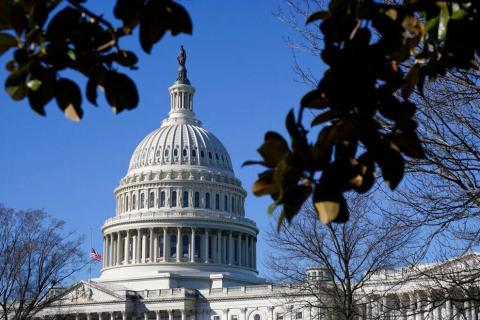
“Five years ago today, our nation witnessed something we never believed possible in a modern American democracy. A violent mob, fueled by deliberate misinformation and incited by the words and actions of a sitting president, stormed the United States Capitol in an effort to overturn a lawful election and halt the peaceful transfer of power. This was not spontaneous outrage. It was the predictable result of months of lies that undermined confidence in our electoral system and encouraged Americans to see one another as enemies rather than fellow citizens.
“The attack left people dead, law enforcement officers injured, and the seat of our democracy desecrated. But the deeper damage was to something less visible and far more fragile: the public’s faith in democracy itself. When leaders normalize falsehoods, attack the legitimacy of elections, and excuse political violence, they weaken the very guardrails that have held this republic together for more than two centuries. History teaches us that democracies rarely collapse all at once. They erode when the rule of law is treated as optional and when power is pursued without regard for truth or consequence.
“Even now, I feel the gravity of January 6 every time I walk through the Capitol. This building is not just marble and stone. It is a symbol of our shared commitment to self-government. To attack it is to attack the idea that in America, leaders are chosen by the people and held accountable by the law.
“January 6 must remain a warning, not a footnote. Defending democracy requires more than remembrance. It demands courage from those in power, honesty from those who lead, and vigilance from all of us. We owe it to future generations to protect free and fair elections, reject political violence in all forms, and reaffirm that no individual is above the Constitution. Our democracy is only as strong as our willingness to defend it, especially when it is tested.”
###